
ASTM A350 LF3
ASTM A350 LF3 Carbon Steel – Low Temperature Forged Components
ASTM A350 LF3 is a nickel-alloyed low-temperature carbon steel grade developed for use in pressure systems, piping components, and flanges operating at cryogenic and sub-zero temperatures.
It offers superior impact toughness, ductility, and strength down to −101°C (−150°F), making it ideal for cryogenic services in LNG, petrochemical, and gas processing industries.
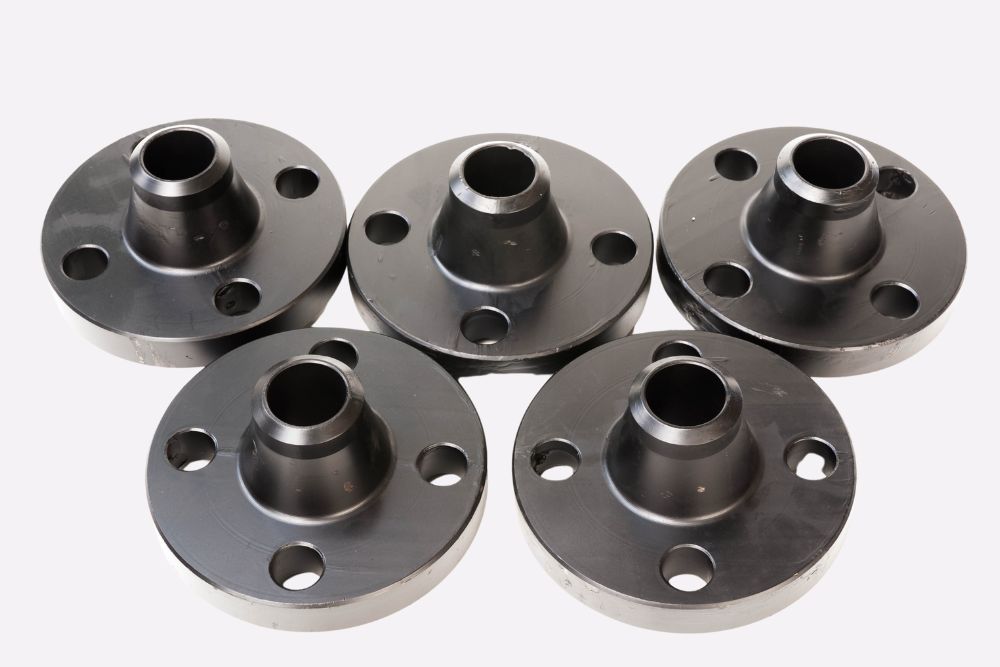
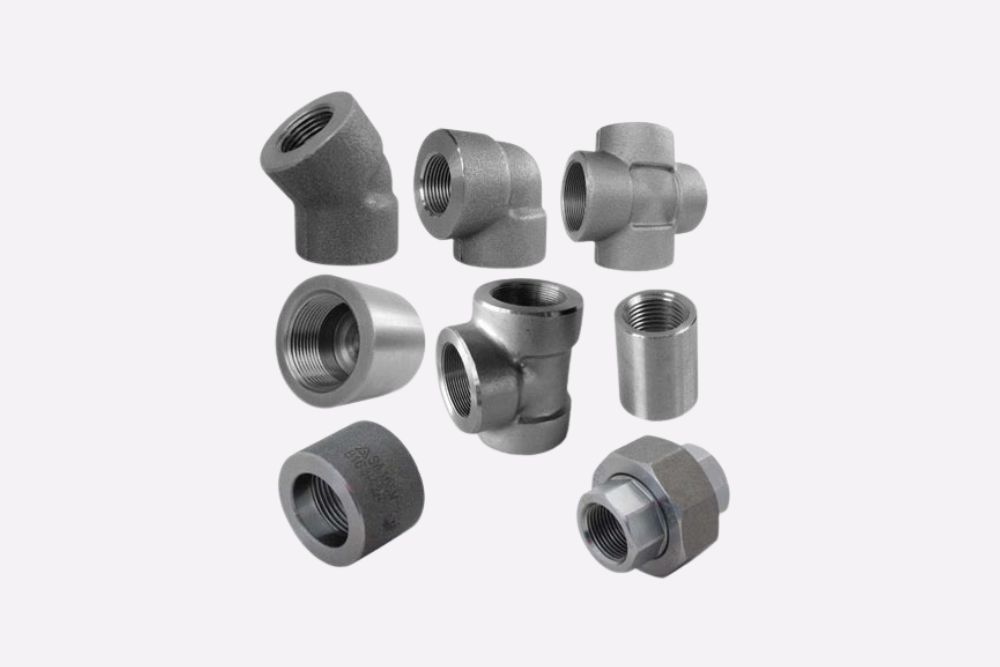
At Emirerri Steel, we manufacture and supply ASTM A350 LF3 flanges, forged fittings, and round bars in accordance with international standards. Our products are known for precision, durability, and reliability even in extreme service conditions.
Key Features
Exceptional toughness at extremely low temperatures (up to −101°C)
High tensile and yield strength
Excellent impact resistance and ductility
Superior weldability and machinability
Nickel content ensures enhanced low-temperature performance
Ideal for cryogenic and pressure vessel applications
Supplied in Normalized, Quenched & Tempered condition

ASTM A350 LF3 – Specification
| Standard | ASTM A350 / ASME SA350 |
|---|---|
| Grade | LF3 |
| Type | Nickel Alloyed Carbon Steel (Low Temperature Service) |
| Product Forms | Forged Flanges, Forged Fittings, Valves, Round Bars |
| Heat Treatment | Normalized or Quenched & Tempered |
| Size Range | NPS ½” to 48” (Flanges & Fittings) / Dia 10mm to 300mm (Bars) |
| Pressure Class | Class 150 to 2500 |
| Manufacturing Standards | ASME B16.5, B16.11, B16.47, MSS-SP-79, 83, 95 |
Equivalent Grades
| Standard | Equivalent Grade |
|---|---|
| EN | P245GH / 15NiCuMoNb5-6-4 |
| DIN | 1.0566 |
| BS | 1503-660-490 |
| JIS | SF490A |
| ISO | P245GH |
Available Sizes
| Product | Size Range |
|---|---|
| Flanges | ½” to 48” NB |
| Forged Fittings | ½” to 4” NB |
| Round Bars | 10mm to 300mm Diameter |
| Custom Sizes | Available Upon Request |
Chemical Composition
| Element | % (by Weight) |
|---|---|
| Carbon (C) | 0.20 max |
| Manganese (Mn) | 0.40 – 1.00 |
| Phosphorus (P) | 0.035 max |
| Sulfur (S) | 0.040 max |
| Silicon (Si) | 0.15 – 0.30 |
| Nickel (Ni) | 2.15 – 3.00 |
| Chromium (Cr) | 0.30 max |
| Molybdenum (Mo) | 0.12 max |
| Copper (Cu) | 0.40 max |
Mechanical Properties
| Property | Unit | Value |
|---|---|---|
| Tensile Strength | MPa | 485 min |
| Yield Strength | MPa | 250 min |
| Elongation | % | 22 min |
| Reduction of Area | % | 35 min |
| Impact Energy (Charpy V-Notch) | J | 27 min at −101°C |
Physical Properties
| Property | Value |
|---|---|
| Density | 7.85 g/cm³ |
| Melting Point | 1425–1450°C |
| Elastic Modulus | 200 GPa |
| Thermal Conductivity | 43 W/m·K |
| Specific Heat Capacity | 485 J/kg·K |
| Coefficient of Expansion | 12.2 µm/m°C |
Types of ASTM A350 LF3 Products
Flanges: Weld Neck, Slip-On, Blind, Socket Weld, Threaded, Lap Joint, Long Weld Neck
Forged Fittings: Elbow, Tee, Union, Coupling, Cap, Plug, Cross
Round Bars / Shafts / Discs / Rings / Blocks
Corrosion Resistance
ASTM A350 LF3 provides moderate resistance to atmospheric corrosion and oxidation. The presence of nickel enhances corrosion resistance and toughness under low-temperature service.
For aggressive environments, applying protective coatings or painting is recommended to prolong service life.
Heat Resistance
Although primarily designed for low-temperature applications, ASTM A350 LF3 offers good oxidation resistance up to 425°C (800°F). Continuous high-temperature exposure is not advised.
Heat Treatment
Normalizing: 870–940°C, followed by air cooling
Tempering: 595–675°C depending on required mechanical properties
Annealing: Optional for relieving internal stresses after machining
Proper heat treatment ensures uniform strength, improved ductility, and enhanced toughness for cryogenic performance.
Welding
ASTM A350 LF3 can be readily welded using conventional techniques such as SMAW, GTAW, or GMAW.
Use low-hydrogen electrodes to prevent cracking
Preheat: 150–200°C (for thick sections)
Post Weld Heat Treatment (PWHT): Recommended to reduce residual stresses
Excellent weldability ensures structural integrity for pressure systems operating under extreme conditions.
Fabrication
The alloy is easily forged, machined, and shaped into complex geometries. Controlled forging between 900–1200°C followed by proper cooling maintains fine-grained microstructure and consistent mechanical properties.
Applications
LNG & Cryogenic Plants
Petrochemical & Gas Processing Units
Refrigeration & Storage Vessels
Pressure Vessels & Heat Exchangers
Offshore & Marine Engineering
Power Generation & Oil Refining
Pipeline Systems & Valve Components