
ASTM A420 WPL9
ASTM A420 WPL9 Pipe Fittings
ASTM A420 WPL9 pipe fittings are low-temperature carbon steel fittings designed for pressure piping and pressure vessel service at subzero temperatures. These fittings provide exceptional toughness, impact strength, and reliability even under cryogenic conditions. WPL9 fittings are primarily used in industries such as oil & gas, petrochemical, and power generation where low-temperature applications are common.
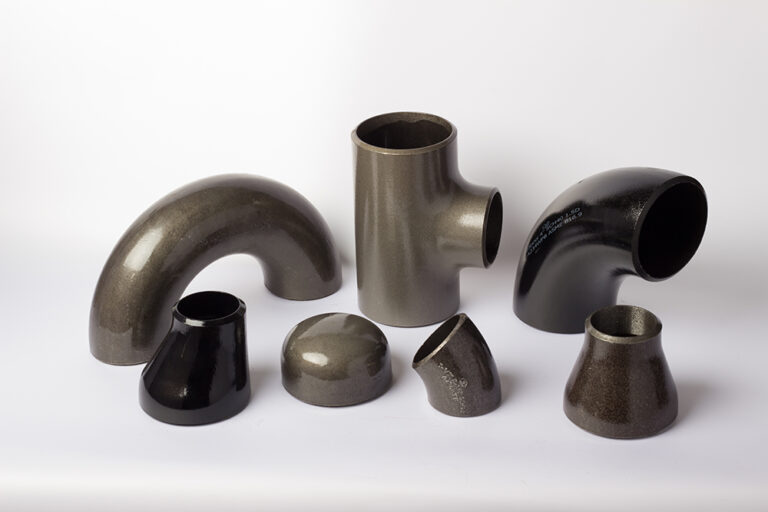
At Emirerri Steel, we manufacture and supply a complete range of ASTM A420 WPL9 Butt Weld Pipe Fittings, including elbows, reducers, tees, caps, and crosses, ensuring leak-free, durable, and high-performance connections for low-temperature services.
Key Features
Excellent toughness at low temperatures
High strength and ductility
Superior resistance to brittle fracture
Good weldability and formability
Available in seamless, welded, and fabricated types
Conforms to international standards (ASME, ANSI, MSS, etc.)
Specification
| Specification | Details |
|---|---|
| Standard | ASTM A420 / ASME SA420 |
| Grade | WPL9 |
| Type | Seamless, Welded, Fabricated |
| Form | Elbows, Tees, Reducers, Caps, Crosses, Stub Ends |
| Size Range | ½” NB to 48” NB |
| Dimensions | ASME B16.9, ASME B16.28, MSS-SP-43 |
| Thickness | Sch 10s, Sch 20, Sch 40, Sch 80, Sch 160, XXS |
| Manufacturing Process | Hot Forming / Cold Forming |
| Application Standard | MSS SP-75, ASME B31.3, B31.1 |
Equivalent Grades
| Standard | Equivalent Grade |
|---|---|
| ASTM | A420 WPL9 |
| ASME | SA420 WPL9 |
| EN | P355NL1 / P355NL2 |
| DIN | 1.0562 |
| JIS | SFVC2 |
Available Sizes
Seamless fittings: up to 24” NB
Welded fittings: up to 48” NB
Wall Thickness: SCH 10 to SCH XXS
Custom sizes available upon request
Chemical Composition
| Element | Content (%) |
|---|---|
| Carbon (C) | 0.20 max |
| Manganese (Mn) | 0.30 – 0.60 |
| Phosphorus (P) | 0.035 max |
| Sulfur (S) | 0.040 max |
| Silicon (Si) | 0.10 – 0.35 |
| Chromium (Cr) | 8.00 – 10.00 |
| Nickel (Ni) | 0.50 max |
| Molybdenum (Mo) | 0.90 – 1.10 |
Mechanical Properties
| Property | Value |
|---|---|
| Tensile Strength | 585 MPa (min) |
| Yield Strength | 415 MPa (min) |
| Elongation | 20% (min) |
| Impact Test | Passed at -46°C |
| Hardness | ≤ 197 HB |
Physical Properties
| Property | Value |
|---|---|
| Density | 7.85 g/cm³ |
| Melting Point | 1425 – 1540°C |
| Modulus of Elasticity | 200 GPa |
| Thermal Conductivity | 45 W/m·K |
| Specific Heat | 480 J/kg·K |
Types of ASTM A420 WPL9 Pipe Fittings
Elbow (45°, 90°, 180°)
Equal & Reducing Tee
Concentric & Eccentric Reducer
End Cap
Cross
Stub End
Return Bends
Corrosion Resistance
ASTM A420 WPL9 exhibits moderate resistance to corrosion in typical atmospheric and mildly corrosive environments. However, it is not suitable for strongly acidic or marine environments without external coating or lining. The fittings are often coated with black paint, epoxy, or galvanization for added protection.
Heat Resistance
WPL9 fittings are designed for low-temperature service rather than high-temperature applications. They retain excellent impact strength and mechanical properties even at temperatures as low as -46°C, making them ideal for cryogenic and refrigerated pipelines.
Heat Treatment
Normalizing at 900–950°C followed by air cooling
Quenching and tempering processes are performed to achieve desired toughness and strength
Stress relieving is recommended after welding
Welding
ASTM A420 WPL9 fittings are readily weldable using conventional welding techniques such as GTAW, SMAW, GMAW, and SAW. Preheating and post-weld heat treatment may be applied depending on wall thickness and service conditions to prevent cracking and ensure ductility.
Fabrication
WPL9 material offers good machinability and formability, allowing precise fabrication into various fittings. Cold and hot forming operations are used depending on the size and design requirements.
Applications
LNG and LPG Plants
Cryogenic Pipelines
Low-temperature Pressure Vessels
Offshore and Onshore Oil & Gas Piping Systems
Petrochemical Processing Units
Refineries
Power Generation Plants