
Inconel 617 Flanges
Inconel 617 Flanges ( UNS N06617 ) Manufacturer & Supplier
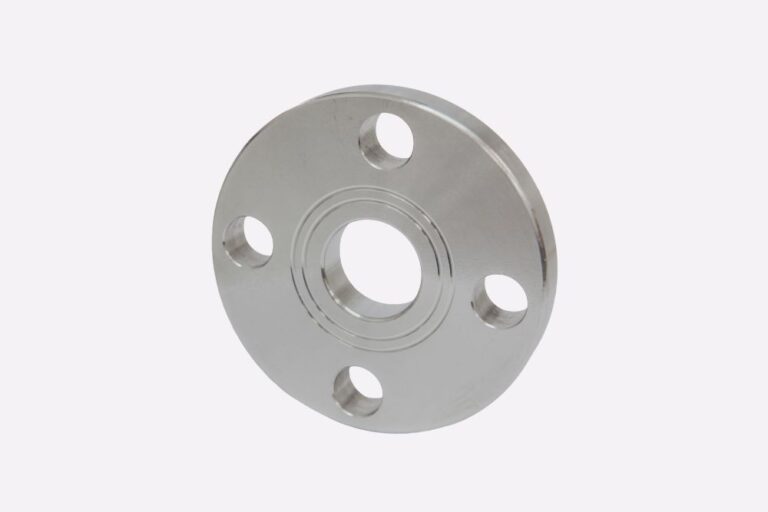
Inconel 617 Flanges are nickel-chromium-cobalt-molybdenum alloy flanges designed for exceptional performance in high-temperature and high-pressure environments. Known for their superior strength, oxidation resistance, and metallurgical stability, these flanges are ideal for industries such as power generation, chemical processing, aerospace, and petrochemical plants.
The combination of chromium for oxidation resistance, cobalt and molybdenum for solid-solution strengthening, and nickel for corrosion resistance enables Inconel 617 to withstand temperatures up to 1100°C (2012°F). These flanges are widely used in components exposed to extreme thermal cycling and carburizing atmospheres.
Key Features
Outstanding high-temperature strength and creep resistance
Excellent oxidation and carburization resistance
Superior metallurgical stability at elevated temperatures
Good resistance to aqueous corrosion and reducing environments
High mechanical strength in both hot and cold conditions
Easy to fabricate and form using standard industrial processes
Suitable for intense thermal cycling and fluctuating environments
Reliable for furnace hardware, gas turbines, and chemical reactors
Specifications
| Specification | Details |
|---|---|
| Standard | ASTM B564, ASME SB564 |
| Material | Inconel Alloy 617 |
| Flange Types | Slip-On, Weld Neck, Blind, Threaded, Socket Weld, Lap Joint, Long Weld Neck, Orifice Flanges, RTJ |
| Size Range | ½” to 48” |
| Pressure Rating | Class 150 to 2500, PN6–PN400 |
| Manufacturing | Forged, Heat Treated, Machined |
| Face Types | RF, RTJ, FF |
| Form | ANSI, ASME, DIN, EN, JIS, BS |
Equivalent Grades
| Standard | Grade |
|---|---|
| UNS | N06617 |
| Werkstoff Nr. | 2.4663 |
| Trade Names | Inconel 617, Alloy 617 |
Available Sizes
Flange Size: ½” to 48”
Thickness: As per ASME/ANSI B16.5, B16.47, B16.48
Custom Sizes: Available on request
Chemical Composition
| Element | Percentage (%) |
|---|---|
| Nickel (Ni) | Balance |
| Chromium (Cr) | 20.0 – 24.0 |
| Cobalt (Co) | 10.0 – 15.0 |
| Molybdenum (Mo) | 8.0 – 10.0 |
| Aluminum (Al) | 0.8 – 1.5 |
| Carbon (C) | 0.05 – 0.15 |
| Iron (Fe) | ≤ 3.0 |
| Silicon (Si) | ≤ 1.0 |
| Manganese (Mn) | ≤ 1.0 |
| Titanium (Ti) | ≤ 0.6 |
Mechanical Properties
| Property | Value |
|---|---|
| Density | 8.36 g/cm³ |
| Tensile Strength | 690 MPa min |
| Yield Strength | 310 MPa min |
| Elongation | 30% min |
| Hardness | 90–100 HRB |
Physical Properties
| Property | Value |
|---|---|
| Melting Point | 1320–1380°C |
| Thermal Conductivity | 12.6 W/m·K |
| Electrical Resistivity | 1.26 µΩ·m |
| Specific Heat | 0.40 kJ/kg·K |
| Modulus of Elasticity | 204 GPa |
Types of Inconel 617 Flanges
Weld Neck Flanges
Slip-On Flanges
Blind Flanges
Socket Weld Flanges
Threaded Flanges
Lap Joint Flanges
Ring Type Joint (RTJ) Flanges
Orifice Flanges
Long Weld Neck Flanges
Reducing Flanges
Corrosion Resistance
Inconel 617 shows exceptional corrosion resistance in:
Oxidizing and reducing environments
High-temperature sulfur atmospheres
Carburizing and nitriding conditions
Hot gases at elevated temperatures
Chloride stress-corrosion cracking environments
Its chromium-rich oxide layer provides long-term protection in furnace conditions and gas stream environments.
Heat Resistance
Withstands continuous service temperatures up to 1100°C
Excellent resistance to oxidation, carburization, and metal dusting
High stability during thermal cycling
Ideal for high-temperature rotating and stationary components
Heat Treatment
Typically used in the solution-annealed condition
Solution Annealing: 2150°F (1175°C) followed by rapid cooling
Heat treatment restores ductility and enhances mechanical strength
Welding
Inconel 617 is weldable using:
GTAW (TIG)
GMAW (MIG)
SMAW
FCAW
Weld metal retains strength and oxidation resistance at high temperatures. Preheating is not required.
Fabrication
Readily formable with standard hot and cold working methods
Hot working temperature: 1700–2200°F
Machinable with carbide tools
Exhibits excellent weldability and forgeability
Applications
Gas turbine engine components
Power generation systems
Heat exchangers and steam generators
Chemical processing plants
Furnace equipment and industrial burners
Petrochemical reactors
Catalyst support grids
Superheater and reheater tubing systems