
Alloy 59 Pipe Fittings
Alloy 59 Pipe Fittings (UNS N06059 / WNR 2.4605)
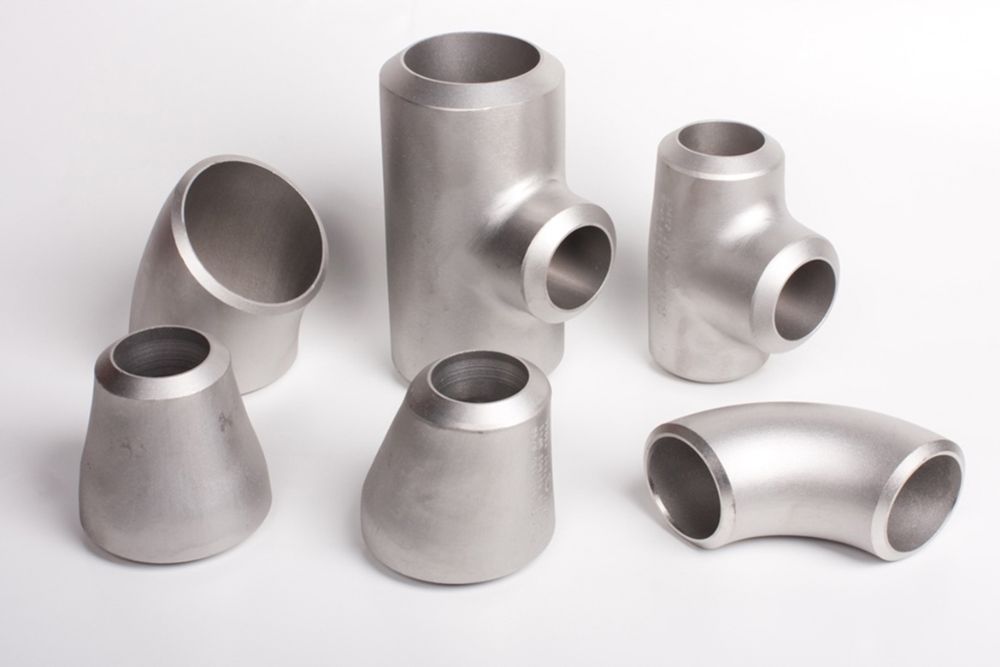
Alloy 59 Pipe Fittings (UNS N06059 / WNR 2.4605) are high-performance nickel-chromium-molybdenum alloy fittings designed for exceptional corrosion resistance in severe industrial environments. Alloy 59 offers outstanding resistance to pitting, crevice corrosion, stress corrosion cracking, and a wide range of oxidizing and reducing chemicals.
Known for its ultra-low carbon and silicon content, Alloy 59 provides excellent welding stability and superior purity, making it suitable for chemical processing, pollution control, petrochemical, and seawater service applications.
These pipe fittings deliver high strength, thermal stability, and long service life in demanding corrosive conditions.
Key Features
Excellent resistance to pitting and crevice corrosion
Exceptional resistance to strong oxidizing and reducing media
Ultra-low carbon content ensures resistance to intergranular corrosion
High mechanical strength and durability
Outstanding stress corrosion cracking (SCC) resistance
Superior weldability and fabrication characteristics
Suitable for high-temperature and high-corrosion environments
Great stability under thermal cycling and severe process conditions

Specification
| Specification | Details |
|---|---|
| Material | Alloy 59 |
| UNS | N06059 |
| WNR | 2.4605 |
| Standards | ASTM B366, ASME SB366 |
| Type | Seamless, Welded, Buttweld, Fabricated |
| Size Range | ½” to 48” |
| Dimensions | ASME B16.9, ASME B16.28, MSS SP-43 |
| Schedule | SCH 5S to SCH XXS |
| Form | Elbow, Tee, Reducer, Cap, Stub End, Cross |
| Testing | PMI, IGC, NDT, Hydrostatic Test |
Equivalent Grades
| Alloy | UNS | WNR |
|---|---|---|
| Alloy 59 | N06059 | 2.4605 |
Available Sizes
Buttweld Pipe Fittings: ½” to 48”
Forged Fittings: ⅛” to 4”
Schedules: SCH 5S, 10S, 40, 80, 160, XXS
Custom sizes available upon request
Chemical Composition
| Element | % Composition |
|---|---|
| Nickel (Ni) | Balance |
| Chromium (Cr) | 22 – 24 |
| Molybdenum (Mo) | 15 – 16.5 |
| Iron (Fe) | ≤ 1.5 |
| Copper (Cu) | ≤ 0.5 |
| Carbon (C) | ≤ 0.01 |
| Silicon (Si) | ≤ 0.1 |
| Manganese (Mn) | ≤ 0.5 |
| Sulfur (S) | ≤ 0.01 |
| Phosphorus (P) | ≤ 0.02 |
Mechanical Properties
| Property | Value |
|---|---|
| Tensile Strength | 790 MPa (min) |
| Yield Strength (0.2% offset) | 355 MPa (min) |
| Elongation | 40% (min) |
| Hardness | 230 HB (max) |
Physical Properties
| Property | Value |
|---|---|
| Density | 8.64 g/cm³ |
| Melting Range | 1320 – 1380°C |
| Thermal Conductivity | 10.5 W/m·K |
| Electrical Resistivity | 1.28 µΩ·m |
| Modulus of Elasticity | 205 GPa |
Types of Alloy 59 Pipe Fittings
Buttweld Fittings
Alloy 59 Elbows (45°, 90°, 180°)
Alloy 59 Tees (Equal & Reducing)
Alloy 59 Reducers (Concentric & Eccentric)
Alloy 59 Stub Ends (Long & Short)
Alloy 59 Caps
Alloy 59 Crosses
Forged / Threaded Fittings
Couplings
Bushings
Unions
Plugs
Nipples
Elbows & Tees (Threaded / Socket Weld)
Corrosion Resistance
Alloy 59 exhibits outstanding resistance against:
Pitting & crevice corrosion
Strong oxidizing & reducing acids
Hydrochloric acid, sulfuric acid, nitric acid
Chloride-rich environments and seawater
Stress corrosion cracking (SCC)
Wet chlorine gas and chlorine-containing systems
Its extremely low carbon and silicon content prevent carbide precipitation, ensuring excellent intergranular corrosion resistance.
Heat Resistance
Suitable for elevated temperature service up to 1000°C
Excellent thermal stability and strength
Resistant to oxidation and thermal fatigue
Maintains structural integrity under high-temperature corrosive media
Heat Treatment
Solution annealing at 1150 – 1200°C, followed by rapid cooling
Stress relieving after heavy forming operations
Avoid prolonged exposure in carbide precipitation zones
Welding
Good weldability using standard processes:
GTAW (TIG)
GMAW (MIG)
SMAW (Stick)
Recommended filler metal: ERNiCrMo-13
Low carbon content eliminates risk of intergranular attack
Avoid excessive heat input to maintain corrosion properties
Fabrication
Readily fabricated using hot and cold forming techniques
Cold working improves strength
Hot working temperature range: 1100 – 900°C
Requires clean working surfaces to avoid contamination
Excellent machinability compared to other Ni-Cr-Mo alloys
Applications
Chemical and Petrochemical Industries
Chemical Processing Equipment
Pollution Control & Waste Treatment Plants
Pharmaceutical and Food Processing
Offshore and Marine Environments
Pulp & Paper Processing
Heat Exchangers, Reactors, Storage Tanks
Acid Production & Acid Handling Systems
Flue Gas Desulfurization Plants