
ASTM A350 LF1
ASTM A350 LF2 Carbon Steel – Low Temperature Forged Components
ASTM A350 LF2 is a low-temperature carbon steel forging grade widely used in pressure systems, piping components, and flanges designed for cryogenic and sub-zero temperature applications. It offers an excellent combination of toughness, strength, ductility, and weldability, even at temperatures as low as −50°C.
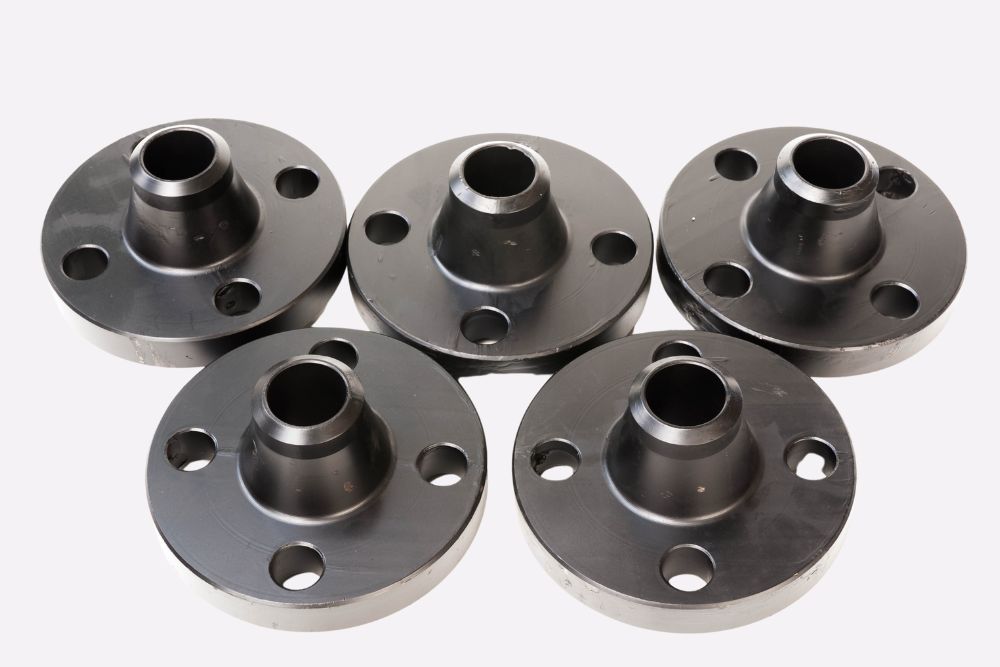
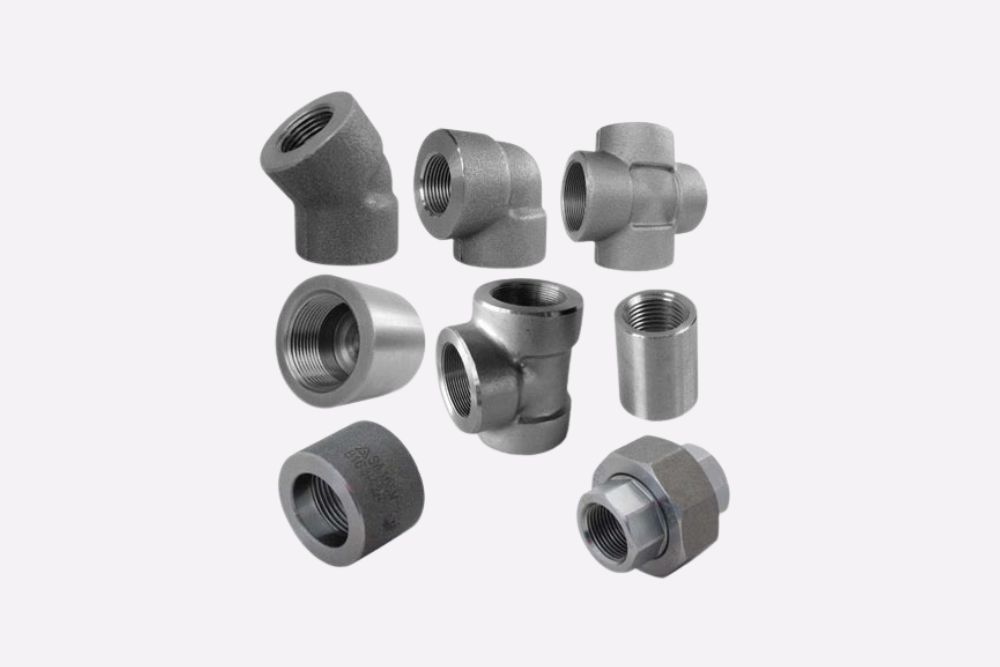
At Emirerri Steel, we manufacture and supply ASTM A350 LF2 flanges, forged fittings, and round bars with exceptional mechanical performance, precise dimensional accuracy, and superior surface finish — meeting all global industrial standards like ASME, DIN, EN, and BS.
Key Features
Outstanding toughness at low temperatures
High yield and tensile strength
Excellent machinability and weldability
Superior impact resistance at −46°C and below
Suitable for cryogenic and refrigerated systems
Compatible with pressure vessels and piping applications
Available in Normalized and Quenched & Tempered conditions

ASTM A350 LF2 – Specification
| Standard | ASTM A350 / ASME SA350 |
|---|---|
| Grade | LF2 (Class 1 / Class 2) |
| Type | Carbon Steel (Low Temperature Service) |
| Product Form | Forged Flanges, Fittings, Valves, Round Bars |
| Heat Treatment | Normalized or Quenched & Tempered |
| Size Range | NPS ½” to 48” (Flanges & Fittings) / Dia 10–300 mm (Bars) |
| Pressure Rating | Class 150 to 2500 |
| Manufacturing Standards | ASME B16.5, B16.11, B16.47, MSS-SP-79, 83, 95 |
ASTM A350 LF2 Equivalent Grades
| Standard | Equivalent Grade |
|---|---|
| EN | P245GH / C22.8 |
| DIN | 1.0460 |
| BS | 1503-161-430 |
| JIS | SF440A |
| ISO | P245GH |
Available Sizes
| Product | Size Range |
|---|---|
| Flanges | ½” to 48” NB |
| Forged Fittings | ½” to 4” NB |
| Round Bars | 10mm to 300mm Diameter |
| Custom Sizes | Available on Request |
Chemical Composition
| Element | % (by Weight) |
|---|---|
| Carbon (C) | 0.30 max |
| Manganese (Mn) | 0.60 – 1.35 |
| Phosphorus (P) | 0.035 max |
| Sulfur (S) | 0.040 max |
| Silicon (Si) | 0.15 – 0.30 |
| Nickel (Ni) | 0.40 max |
| Chromium (Cr) | 0.30 max |
| Molybdenum (Mo) | 0.12 max |
| Copper (Cu) | 0.40 max |
Mechanical Properties
| Property | Unit | Value |
|---|---|---|
| Tensile Strength | MPa | 485 min |
| Yield Strength | MPa | 250 min |
| Elongation | % | 22 min |
| Reduction of Area | % | 35 min |
| Impact Energy (Charpy V-Notch) | J | 27 min at −46°C |
Physical Properties
| Property | Value |
|---|---|
| Density | 7.85 g/cm³ |
| Melting Point | 1450°C (approx.) |
| Elastic Modulus | 200 GPa |
| Thermal Conductivity | 43 W/m·K |
| Specific Heat Capacity | 486 J/kg·K |
Types of ASTM A350 LF2 Products
Flanges: Weld Neck, Slip-On, Blind, Socket Weld, Threaded, Lap Joint, Long Weld Neck
Forged Fittings: Elbow, Tee, Union, Coupling, Cap, Plug, Cross
Round Bars / Shafts / Discs / Rings
Corrosion Resistance
ASTM A350 LF2 exhibits moderate resistance to general atmospheric and mild chemical corrosion. However, since it is not stainless steel, it should be protected by coating, galvanizing, or painting when used in corrosive or marine environments.
Regular maintenance enhances corrosion resistance and prolongs the material’s service life.
Heat Resistance
While ASTM A350 LF2 provides adequate oxidation resistance up to 425°C (800°F), it is primarily designed for low-temperature service. Continuous exposure to elevated temperatures is not recommended.
Heat Treatment
Normalizing: 860–940°C followed by air cooling
Tempering: 595–675°C based on desired mechanical properties
Annealing (Optional): For stress relief after forging or machining
Proper heat treatment improves toughness, ductility, and uniform grain structure, ensuring reliability in cryogenic conditions.
Welding
ASTM A350 LF2 offers excellent weldability with most conventional welding techniques (SMAW, GTAW, GMAW).
Preheating: Recommended at 150–200°C for thick sections
Post Weld Heat Treatment (PWHT): Recommended to relieve stress and enhance joint strength
Compatible with low hydrogen electrodes
Fabrication
This grade can be forged, machined, and formed with ease. It maintains dimensional accuracy during forging, allowing precise shaping into customized flanges and fittings. Proper control of forging temperature (900–1200°C) ensures fine-grain microstructure and excellent toughness.
Applications
LNG & Cryogenic Processing Plants
Oil & Gas Pipelines
Pressure Vessels & Heat Exchangers
Refrigeration Units & Storage Tanks
Offshore Platforms & Petrochemical Plants
Power Generation Equipment