
Hastelloy B2 Flanges
Hastelloy B2 Flanges ( UNS N10665 ) Manufacturer & Supplier
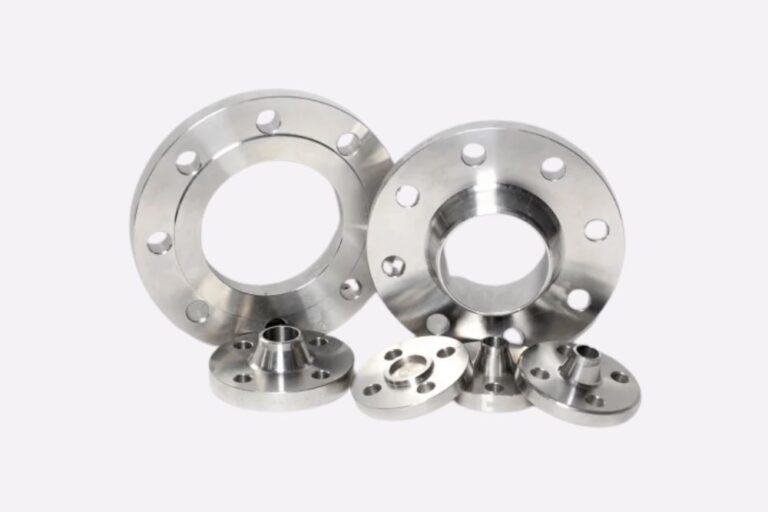
Hastelloy B2 Flanges are nickel-molybdenum alloy flanges renowned for their exceptional resistance to reducing environments, including hydrogen chloride gas, sulfuric acid, acetic acid, and phosphoric acid. These flanges are widely used in chemical processing, petrochemical plants, heat exchangers, pharmaceuticals, and pollution control sectors where high corrosion resistance and durability are essential.
Manufactured with superior precision, Hastelloy B2 flanges maintain excellent mechanical strength even at elevated temperatures and offer outstanding resistance to pitting, stress corrosion cracking, and knife-line attack.
Key Features
Excellent resistance to reducing media such as HCl, H₂SO₄, H₃PO₄, and acetic acid.
High Molybdenum content ensures superior corrosion resistance and strength.
Outstanding thermal stability and resistance to grain-boundary carbides.
Excellent stress corrosion cracking resistance in chloride-containing environments.
Suitable for high-temperature services and harsh industrial processing.
Versatile manufacturing compatibility for welding, forming & fabrication.
Dimensional accuracy & leak-proof performance in critical operations.
Specification
| Specification | Details |
|---|---|
| Grade | Hastelloy B2 |
| Standards | ASTM B564 / ASME SB564 |
| Flange Types | Slip-On, Weld Neck, Blind, Socket Weld, Lap Joint, Threaded, Orifice, Ring Type Joint (RTJ) |
| Size Range | ½” to 48” |
| Pressure Class | 150#, 300#, 600#, 900#, 1500#, 2500# |
| Face Type | RF, RTJ, FF |
| Production Technique | Forged / Heat Treated / Machined |
| Form | Flanges, Forgings, Rings, Discs |
Equivalent Grade
| Standard | Grade |
|---|---|
| UNS | N10665 |
| Werkstoff Nr. | 2.4617 |
| JIS | NW0665 |
| BS / European | – |
| GOST | – |
Available Sizes
Nominal Size: ½” to 48”
Custom sizes available upon request
Wall Thickness: SCH 10 to SCH XXS
Pressure Rating: Class 150 to Class 2500
Chemical Composition
| Element | Content (%) |
|---|---|
| Nickel (Ni) | Balance |
| Molybdenum (Mo) | 26 – 30 |
| Iron (Fe) | ≤ 2 |
| Chromium (Cr) | ≤ 1 |
| Cobalt (Co) | ≤ 1 |
| Manganese (Mn) | ≤ 1 |
| Carbon (C) | ≤ 0.01 |
| Silicon (Si) | ≤ 0.10 |
| Phosphorus (P) | ≤ 0.04 |
| Sulfur (S) | ≤ 0.03 |
Mechanical Properties
| Property | Value |
|---|---|
| Tensile Strength | 760 MPa (min) |
| Yield Strength (0.2% Offset) | 350 MPa (min) |
| Elongation | 40% (min) |
| Hardness | 85 HRB (max) |
Physical Properties
| Property | Value |
|---|---|
| Density | 9.24 g/cm³ |
| Melting Range | 1320–1380°C |
| Electrical Resistivity | 1.26 µΩ·m |
| Thermal Conductivity | 9 W/m·K |
| Specific Heat | 420 J/kg·K |
Types of Hastelloy B2 Flanges
Weld Neck Flanges (WN)
Slip-On Flanges (SO)
Blind Flanges (BLRF)
Threaded Flanges (THRF)
Socket Weld Flanges (SWRF)
Lap Joint Flanges (LJRF)
Orifice Flanges
Reducing Flanges
Long Weld Neck Flanges
Ring Type Joint Flanges (RTJ)
Corrosion Resistance
Hastelloy B2 flanges offer outstanding resistance to highly reducing environments, including:
Hydrochloric acid (HCl) at all concentrations and temperatures
Sulfuric acid & acetic acid
Hydrogen fluoride gas
Phosphoric acid
Organic compounds
Stress corrosion cracking
Pitting & crevice corrosion
Their stability against grain-boundary carbide precipitation enhances performance during welding and heat treatment.
Heat Resistance
Excellent strength retention up to 900°C
Maintains structural stability during long-term exposure
Superior resistance to thermal fatigue and oxidation
Suitable for high-temperature chemical reactors & heat exchangers
Heat Treatment
Solution Treatment: 1065°C followed by rapid quenching
Prevents carbide precipitation
Restores corrosion resistance after heavy forming or welding
Enhances mechanical stability
Welding
Hastelloy B2 flanges can be welded using:
GTAW (TIG)
GMAW (MIG)
SMAW (Stick Welding)
Key Welding Characteristics:
Excellent weldability
Low risk of hot cracking
No need for post-weld heat treatment (PWHT)
Use matching filler alloys for best results
Fabrication
Suitable for deep drawing, forming, and machining
Avoid working at temperatures between 540°C – 760°C to prevent embrittlement
Anneal after heavy cold work
Excellent machinability with proper carbide tools
Applications
Chemical Processing Plants
Petrochemical Industry
Pharmaceutical Processing
Hydrogen Chloride Gas Plants
Acid Production Units
Heat Exchangers & Pressure Vessels
Pulp & Paper Industry
Pollution Control Equipment
Marine & Offshore Applications