
Inconel 718 Flanges
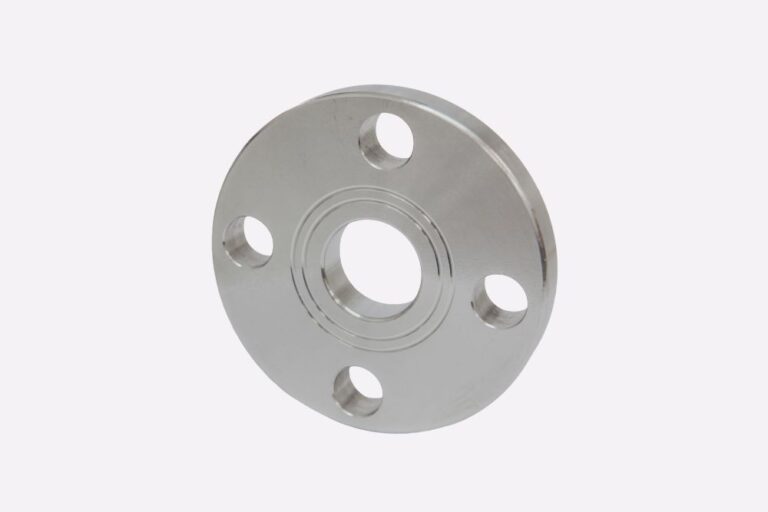
Inconel 718 Flanges (UNS N07718) Nickel Alloy Flanges
Inconel 718 Flanges, designated as UNS N07718, are high-strength, precipitation-hardenable nickel-chromium alloy flanges known for exceptional mechanical strength, superior corrosion resistance, and outstanding performance at elevated temperatures. The alloy maintains excellent tensile, creep, and rupture strength up to 700°C, making it ideal for demanding environments such as aerospace, power generation, petrochemical, and cryogenic applications.
With the addition of niobium and molybdenum, Inconel 718 offers remarkable hardness and fatigue resistance while maintaining superior weldability compared to other precipitation-hardened alloys. These flanges are widely used for high-pressure systems, turbine components, heat exchangers, and chemical processing equipment.
Specifications
| Specification | Details |
|---|---|
| Standard | ASTM B637, ASME SB637 |
| Material | Inconel 718 / Alloy 718 |
| UNS Number | N07718 |
| Werkstoff Nr. | 2.4668 |
| Flange Types | WN, SO, BL, SW, Threaded, Lap Joint, RTJ, Orifice, Long Weld Neck |
| Size Range | ½” to 48” |
| Pressure Rating | Class 150 to 2500 / PN6–PN400 |
| Manufacturing | Forged, Heat Treated, Machined |
| Face Type | RF, RTJ, FF |
| Design Standards | ASME B16.5, B16.47, B16.48, DIN, EN, BS |
Equivalent Grades
| Standard | Grade |
|---|---|
| UNS | N07718 |
| Werkstoff | 2.4668 |
| Trade Name | Inconel 718, Alloy 718 |
Available Sizes
Flange Size: ½” to 48”
Pressure Class: Class 150 – 2500
Custom Machined Sizes: Available on request
Chemical Composition
| Element | Percentage (%) |
|---|---|
| Nickel (Ni) | 50.0 – 55.0 |
| Chromium (Cr) | 17.0 – 21.0 |
| Iron (Fe) | Balance |
| Niobium (Nb) + Tantalum (Ta) | 4.75 – 5.50 |
| Molybdenum (Mo) | 2.80 – 3.30 |
| Titanium (Ti) | 0.65 – 1.15 |
| Aluminum (Al) | 0.20 – 0.80 |
| Cobalt (Co) | ≤ 1.0 |
| Manganese (Mn) | ≤ 0.35 |
| Silicon (Si) | ≤ 0.35 |
| Carbon (C) | ≤ 0.08 |
| Sulfur (S) | ≤ 0.015 |
| Copper (Cu) | ≤ 0.30 |
Mechanical Properties
| Property | Value |
|---|---|
| Tensile Strength | 1275 MPa (min) |
| Yield Strength (0.2% offset) | 1035 MPa (min) |
| Elongation | 12% (min) |
| Reduction of Area | 15% (min) |
| Hardness | 363 HB (typical) |
| Impact Strength | High at room & cryogenic temperatures |
Physical Properties
| Property | Value |
|---|---|
| Density | 8.19 g/cm³ |
| Melting Point | 1260–1336°C |
| Thermal Conductivity | 11.4 W/m·K |
| Electrical Resistivity | 1.29 µΩ·m |
| Specific Heat | 435 J/kg·K |
| Modulus of Elasticity | 200 GPa |
Types of Inconel 718 (UNS N07718) Flanges
Weld Neck Flanges
Blind Flanges
Slip-On Flanges
Socket Weld Flanges
Threaded Flanges
Lap Joint Flanges
RTJ Flanges
Orifice Flanges
Long Weld Neck Flanges
Reducing Flanges
Corrosion Resistance
Inconel 718 exhibits outstanding corrosion resistance in:
Oxidizing and reducing environments
High-temperature corrosive gases
Chloride-containing environments
Hydrofluoric acid, sulfuric acid, and nitric acid
Stress-corrosion cracking environments
Seawater and marine atmospheres
A protective oxide layer enhances its resistance to pitting, crevice corrosion, and high-temperature oxidation.
Heat Resistance
Excellent strength retained up to 700°C
Exceptional oxidation resistance up to 980°C
High resistance to carburization and nitriding
Suitable for fired heaters, gas turbines, and reactor components
Heat Treatment
Inconel 718 is strengthened by precipitation hardening:
Standard Heat Treatment Cycles
Solution Annealing: 1750–1800°F (955–980°C)
Aging Treatment:
1325°F (720°C) for 8 hours, furnace cool
1150°F (620°C) for 8 hours
This process enhances mechanical strength, fatigue resistance, and hardness.
Welding
Inconel 718 offers excellent weldability due to low susceptibility to post-weld cracking.
Suitable Welding Techniques
GTAW (TIG)
GMAW (MIG)
SMAW
Laser Welding
Recommended Filler Metals
Inconel Filler 718
Inconel Filler 625
Controlled heat input is essential for optimal precipitation hardening.
Fabrication
Excellent hot and cold workability
Hot working temperature range: 1700–2200°F (925–1200°C)
Good machinability with carbide tools
Easily formable due to good ductility
Capable of deep drawing, spinning, forging, and machining
Applications
Gas turbines & jet engine components
Aerospace fasteners and structural parts
Nuclear reactors and power plants
Chemical and petrochemical processing
High-pressure pumps and valves
Heat exchangers and steam generators
Oil & gas drilling tools
Cryogenic storage systems
Marine and seawater systems