
The oil and gas industry operates in some of the most demanding environments on earth—extreme pressures, corrosive conditions, and high temperatures are part of daily operations. At the heart of this complex infrastructure lies a critical component: API pipes. These pipes are engineered to meet strict international standards, ensuring safety, durability, and performance across upstream, midstream, and downstream operations.
In this comprehensive guide, we will explore what API pipes are, their technical specifications, types, applications, and why they are essential for oil and gas projects. We’ll also highlight how Emirerri Steel delivers reliable API pipe solutions to global clients.
What Are API Pipes?
API pipes are steel pipes manufactured according to standards set by the American Petroleum Institute. These standards define the requirements for materials, dimensions, mechanical properties, and testing methods to ensure pipes can withstand harsh oil and gas environments.
The most widely used API standards include:
- API 5L – Line pipes for transportation of oil, gas, and water
- API 5CT – Casing and tubing for drilling operations
- API 5DP – Drill pipes used in drilling rigs
These guidelines guarantee consistency and dependability throughout international oil and gas activities.
API Pipes' Significance in Oil and Gas
API pipes are not just structural components—they are critical to operational safety and efficiency.
Key Roles:
- Transport refined goods, natural gas, and crude oil
- Maintain well integrity during drilling
- Handle high-pressure and corrosive environments
- Ensure leak-proof and safe operations
Without API-compliant pipes, the risk of pipeline failure, environmental hazards, and operational downtime increases significantly.
Types of API Pipes
1. API 5L Line Pipes
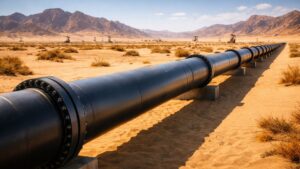
API 5L pipes are used in pipeline transportation systems.
Grades:
Manufacturing Types:
- Seamless (SMLS)
- ERW (Electric Resistance Welded)
- LSAW (Longitudinal Submerged Arc Welded)
- SSAW (Spiral Submerged Arc Welded)
Applications:
- Long-distance oil & gas pipelines
- Offshore and onshore transportation
2. API 5CT Casing & Tubing
Used in drilling operations to maintain well structure.
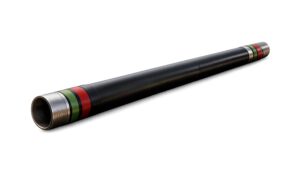
Types:
- Casing Pipe (protects wellbore)
- Tubing Pipe (transports oil/gas to surface)
Grades:
- J55, K55, N80, L80, P110
Key Features:
- High collapse resistance
- Excellent tensile strength
- Corrosion-resistant options available
3. API 5DP Drill Pipes
Used to transfer torque and drilling fluid in drilling rigs.
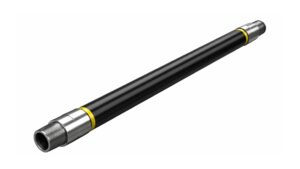
Grades:
- E75
- X95
- G105
- S135
Properties:
- High fatigue resistance
- Superior toughness
- Precision threading
Technical Specifications of API Pipes
Understanding the technical parameters is crucial for selecting the right API pipe.
Chemical Composition (Typical for API 5L)
- Carbon (C): 0.16% – 0.28%
- Manganese (Mn): 1.2% – 1.6%
- Phosphorus (P): ≤ 0.025%
- Sulfur (S): ≤ 0.015%
These elements influence strength, weldability, and corrosion resistance.
Mechanical Properties
| Grade | Yield Strength (MPa) | Tensile Strength (MPa) |
|---|---|---|
| X42 | ≥ 290 | ≥ 415 |
| X52 | ≥ 360 | ≥ 460 |
| X65 | ≥ 450 | ≥ 535 |
| X70 | ≥ 485 | ≥ 570 |
Dimensions
- Outer Diameter (OD): ½” to 60”
- Wall Thickness: SCH 10 to SCH XXS
- Length:
- Single Random Length (SRL): 5–7 meters
- Double Random Length (DRL): 11–13 meters
Testing & Inspection
API pipes undergo rigorous testing to ensure reliability:
- Hydrostatic Testing
- Non-Destructive Testing (NDT)
- Ultrasonic Testing (UT)
- Radiographic Testing (RT)
- Charpy Impact Testing
These tests ensure pipes can withstand operational stress and environmental conditions.
Coatings and Corrosion Protection
Oil and gas pipelines often operate in corrosive environments. Protective coatings are essential.
Common Coatings:
- 3LPE (Three-Layer Polyethylene) – Excellent corrosion resistance
- FBE (Fusion Bonded Epoxy) – Strong adhesion and chemical resistance
- Coal Tar Epoxy – Cost-effective protection
- Galvanization – Zinc coating for corrosion prevention
Applications Across Oil & Gas Sectors
Upstream (Exploration & Production)
- Drill pipes (API 5DP)
- Casing and tubing (API 5CT)
Midstream (Transportation)
- Line pipes (API 5L) for pipelines
- Compressor station piping
Downstream (Refining & Distribution)
- Process piping
- Storage tank connections
Advantages of API Pipes
- Standardization: Global acceptance and compatibility
- Durability: Long service life under extreme conditions
- Safety: Reduced risk of leaks and failures
- Versatility: Suitable for various applications
- Cost Efficiency: Lower maintenance and replacement costs
API Pipes vs ASTM Pipes
While API pipes are designed for oil & gas applications, ASTM pipes (by ASTM International) are more general-purpose.
| Feature | API Pipes | ASTM Pipes |
|---|---|---|
| Application | Oil & Gas Industry | General Engineering |
| Standards | API 5L, 5CT, 5DP | ASTM A106, A53 |
| Testing | More stringent | Standard testing |
| Cost | Higher | Moderate |
Selection Criteria for API Pipes
Choosing the right API pipe depends on:
- Operating pressure and temperature
- Corrosive environment
- Required mechanical strength
- Pipeline length and diameter
- Compliance with project specifications
Working with a reliable supplier ensures proper material selection and compliance.
Global Demand and Market Trends
The demand for API pipes is increasing due to:
- Expansion of oil & gas exploration
- Growth in LNG projects
- Increasing offshore drilling activities
- Infrastructure development in emerging markets
Regions like the Middle East, Africa, and Asia are major consumers of API pipes.
Why Choose Emirerri Steel for API Pipes?
At Emirerri Steel, we specialize in supplying high-quality API pipes tailored to the oil & gas industry. With a strong presence across Africa and global markets, we deliver products that meet international standards and project-specific requirements.
Our Strengths:
- Wide range of API grades (API 5L, 5CT, 5DP)
- Strict quality control and testing
- Competitive pricing and global sourcing
- Timely delivery for critical projects
- Expertise in MENA and African markets
Conclusion
API pipes are the backbone of the oil and gas industry, ensuring safe and efficient transportation of resources across vast distances. With strict standards, advanced manufacturing, and rigorous testing, these pipes deliver unmatched performance in extreme conditions.
Just as crucial as choosing the correct pipe is choosing the right supplier. With Emirerri Steel, you gain a partner committed to quality, reliability, and long-term success.