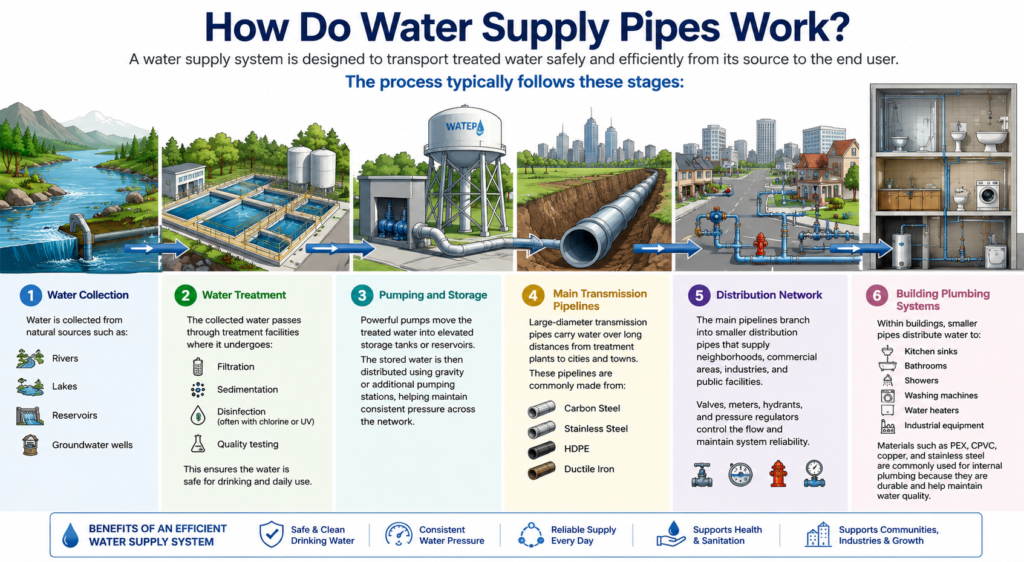
Water supply systems are designed to deliver clean and safe drinking water from treatment plants, reservoirs, or wells to homes, commercial buildings, industries, and municipal infrastructure. Choosing the right type of water supply pipe is essential because it directly affects water quality, durability, maintenance costs, and the overall lifespan of the plumbing system.
Modern water supply networks use various types of pipes depending on pressure requirements, installation location, water quality, temperature, and budget. Each material offers unique advantages for specific applications.
In this guide, we’ll explain the different types of water supply pipes, the materials used, and how these pipes transport water efficiently.
Why Selecting the Right Water Supply Pipe Matters
Water supply pipes must provide:
Safe drinking water
Corrosion resistance
Leak-free performance
High pressure resistance
Long service life
Low maintenance
Cost-effective installation
The wrong pipe material can lead to corrosion, leakage, contamination, or expensive repairs.
Types of Pipes Used for Water Supply
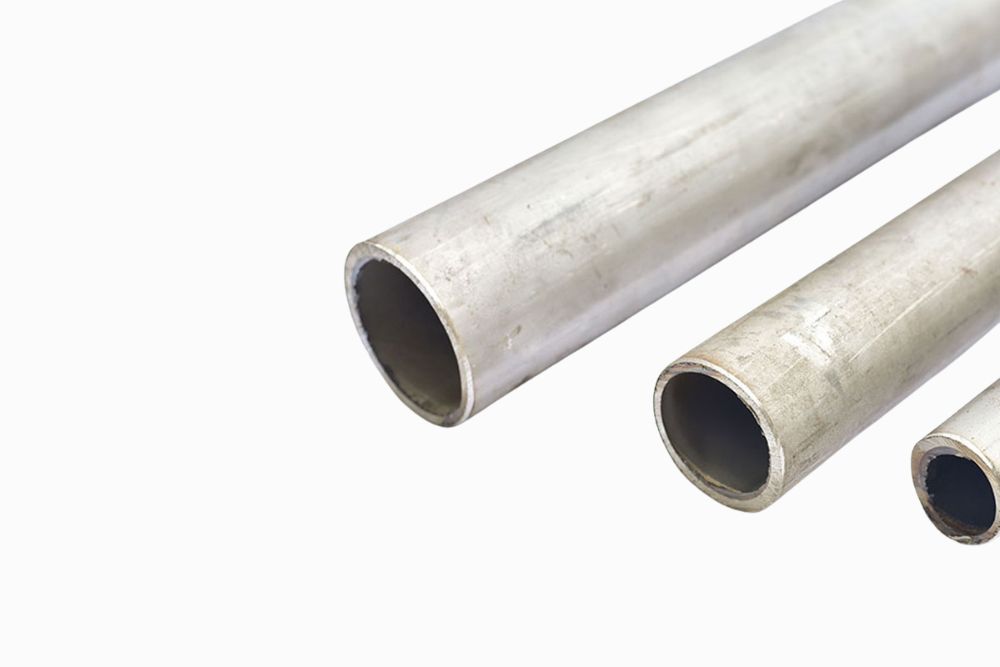
Stainless Steel Pipe
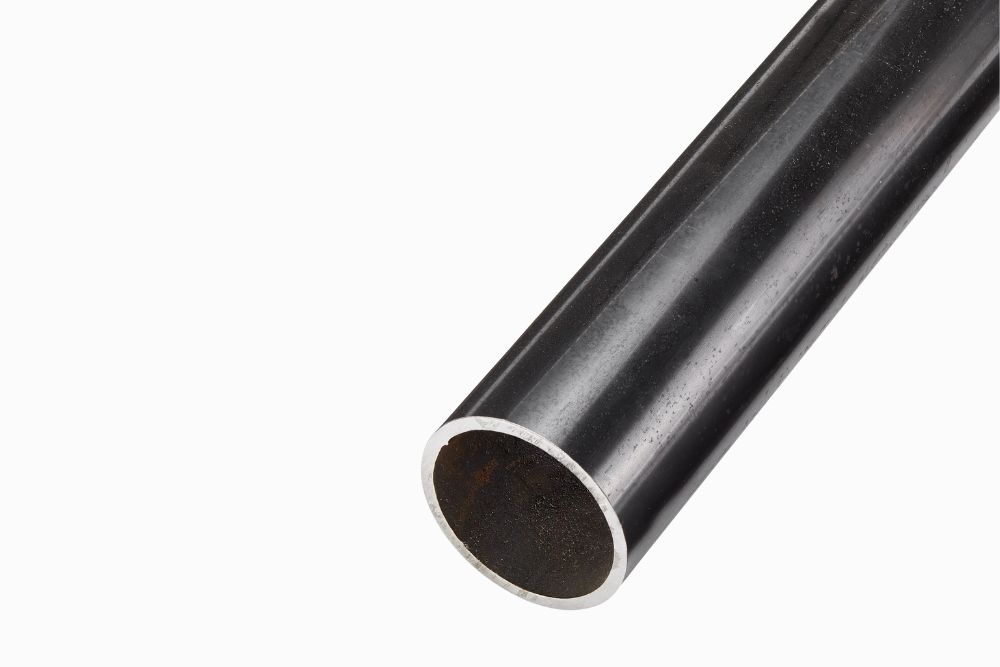
Carbon Steel Pipe
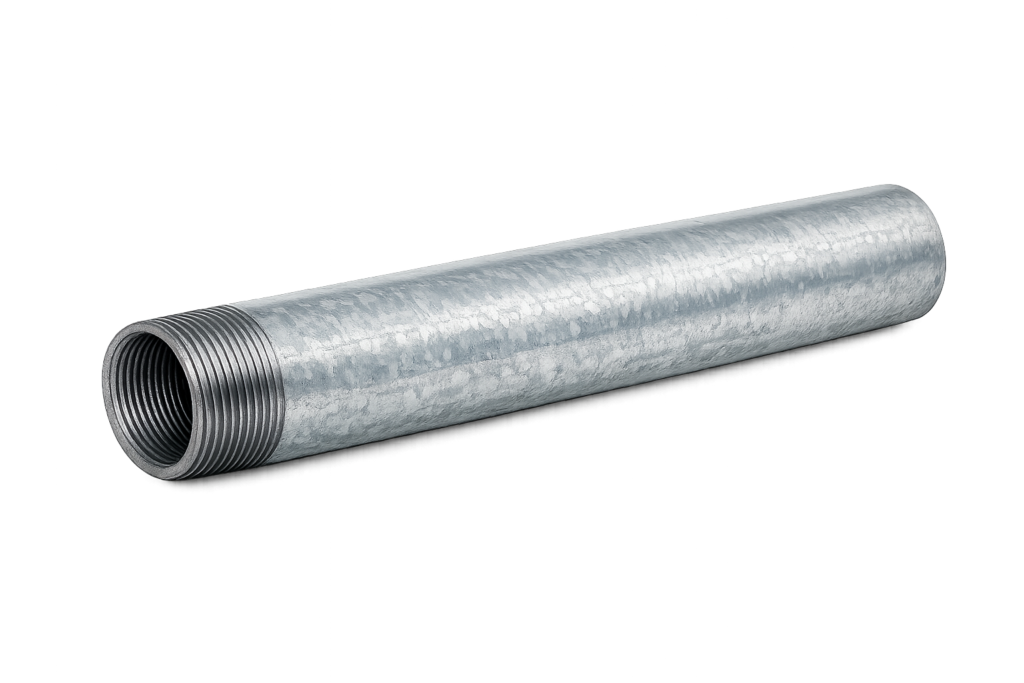
Galvanized Steel Pipe
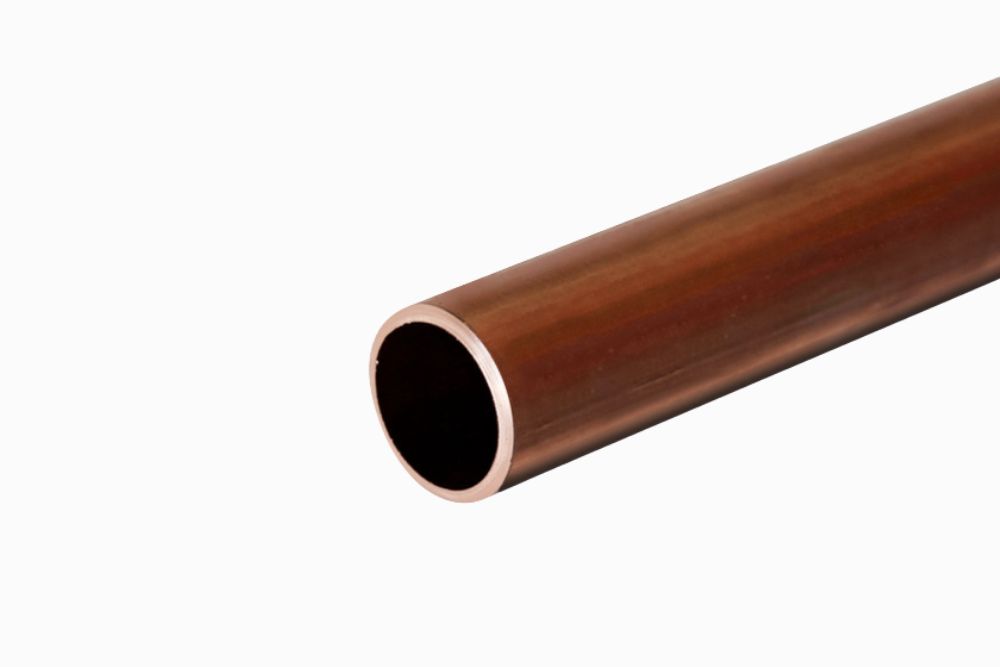
Copper Pipe
Comparison of Water Supply Pipe Materials
Pipe Type
Material
Corrosion Resistance
Hot Water
Typical Use
Stainless Steel
SS304, SS316
Excellent
Yes
Industrial, commercial, potable water
Carbon Steel
ASTM A53, API 5L
Moderate (coated)
Yes
Large transmission pipelines
Galvanized Steel
Zinc-coated steel
Good
Yes
Older buildings
Copper
Pure Copper
Excellent
Yes
Residential plumbing
Factors to Consider When Choosing Water Supply Pipes
Before selecting a pipe, consider:
Water quality
Pressure requirements
Operating temperature
Installation environment
Corrosion exposure
Expected service life
Maintenance requirements
Local plumbing codes
Budget
Choosing the appropriate material helps ensure long-term performance, reduces maintenance costs, and minimizes the risk of leaks or contamination.
Conclusion
The best pipe for a water supply system depends on the specific application. Stainless steel is ideal where hygiene, durability, and corrosion resistance are critical. Carbon steel remains a strong choice for large transmission lines when protected against corrosion.
A well-designed water supply network—using the right combination of pipe materials and proper installation—ensures clean, reliable water reaches homes, businesses, and industries safely for decades.